Enter for electrical
"Half the house has no power" is a different job from "I need a socket moved".
Your contact form cannot tell them apart. Enter asks, and sends you a lead with the problem, the urgency and a time window.
Enter runs today for heating, cooling and plumbing. The electrical pack is being built — tell us in the chat that you want it and we will come back to you when it is ready, not before.
Summit Heating & Plumbing
Closed — back at 8am
We're closed for the evening, but I can take the details and someone will call you first thing. What's going on?
water heater is leaking in the basement
That's not one to leave overnight. Is it a slow drip, or is water pooling on the floor?
pooling. started last night
That points at the tank rather than a fitting, so someone will need to see it. What's the best number to reach you on?
What it will ask about
This is the list we are building for electrical work. When you join, you tell us what you actually take on — and anything outside it is turned away politely rather than booked and cancelled.
- No power to part of the house
- Breaker tripping repeatedly
- Panel or fuse box upgrade
- Outlet or switch not working
- Lighting installation
- EV charger installation
- Fault finding
- Something else
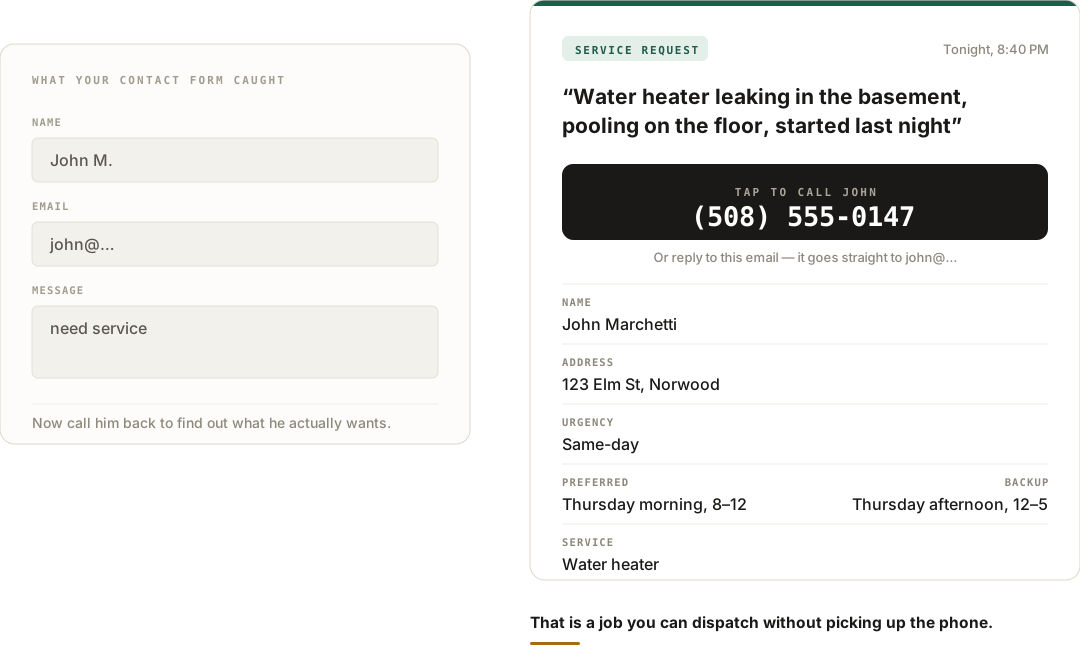
Instead of your contact form
The same visitor, recorded twice.
When it cannot wait
Someone typing “burning smell from the panel” is not filling in a form.
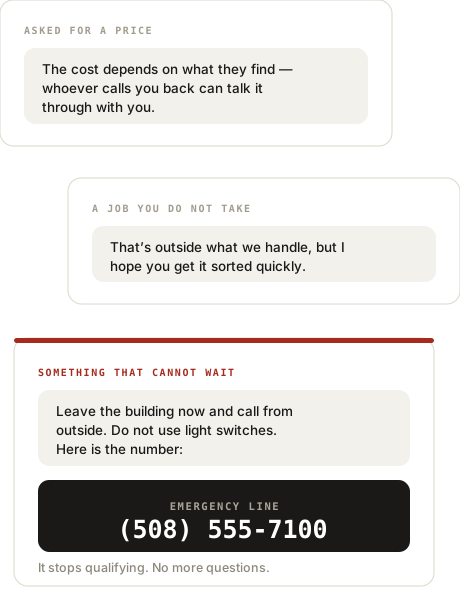
Enter is built to recognize the things that cannot wait, show your number and tell people to call it rather than typing. The electrical triggers are part of what we are working on now.
What it will and won't say
The useful part is what it refuses to do.
You are putting something on your website that talks to your customers while you are not watching. So the first thing worth knowing is where its edges are.
-
It only quotes prices you have written down.
If you have not given it a price for a job, it does not have one. It will not estimate, guess, round, or reason its way to a number from something else you said.
-
It declines work you do not do.
You choose your services. A job outside them is turned away politely rather than booked and cancelled a day later.
-
It knows when you are open.
Your hours decide what it is allowed to promise. It will not tell someone you will call within the hour at 11pm, and it does not pretend you are at your desk when you are asleep.
-
It never confirms an appointment.
It asks when they would prefer someone came, and records a first choice and a backup. It will not say booked, confirmed or scheduled, because only you can do that.
“Someone will call you at eight to fix a time.”
-
It never invents an answer.
If it does not know, it says so and tells them a person will follow up. That is the whole behavior — there is no clever fallback underneath it.
Tell us you want the electrical pack.
We would rather build it properly than switch on a generic version and let it guess at your trade. Open the chat in the corner, tell us your trade, and you will hear from us when it is real.
See how it works